How Smart Learning Classrooms Improve Student Understanding
Education is evolving quickly. Traditional chalk-and-board teaching still plays an important role, but modern classrooms are increasingly supported by technology that makes learning more interactive and engaging. Smart learning classrooms are designed to help students understand concepts better, participate actively, and develop skills that go beyond memorizing information.
Many parents today look for schools that combine strong academic teaching with modern learning tools. Smart classrooms, digital learning platforms, and structured extracurricular programs together create an environment where students can learn more effectively and grow in multiple ways.
What is a smart learning classroom?
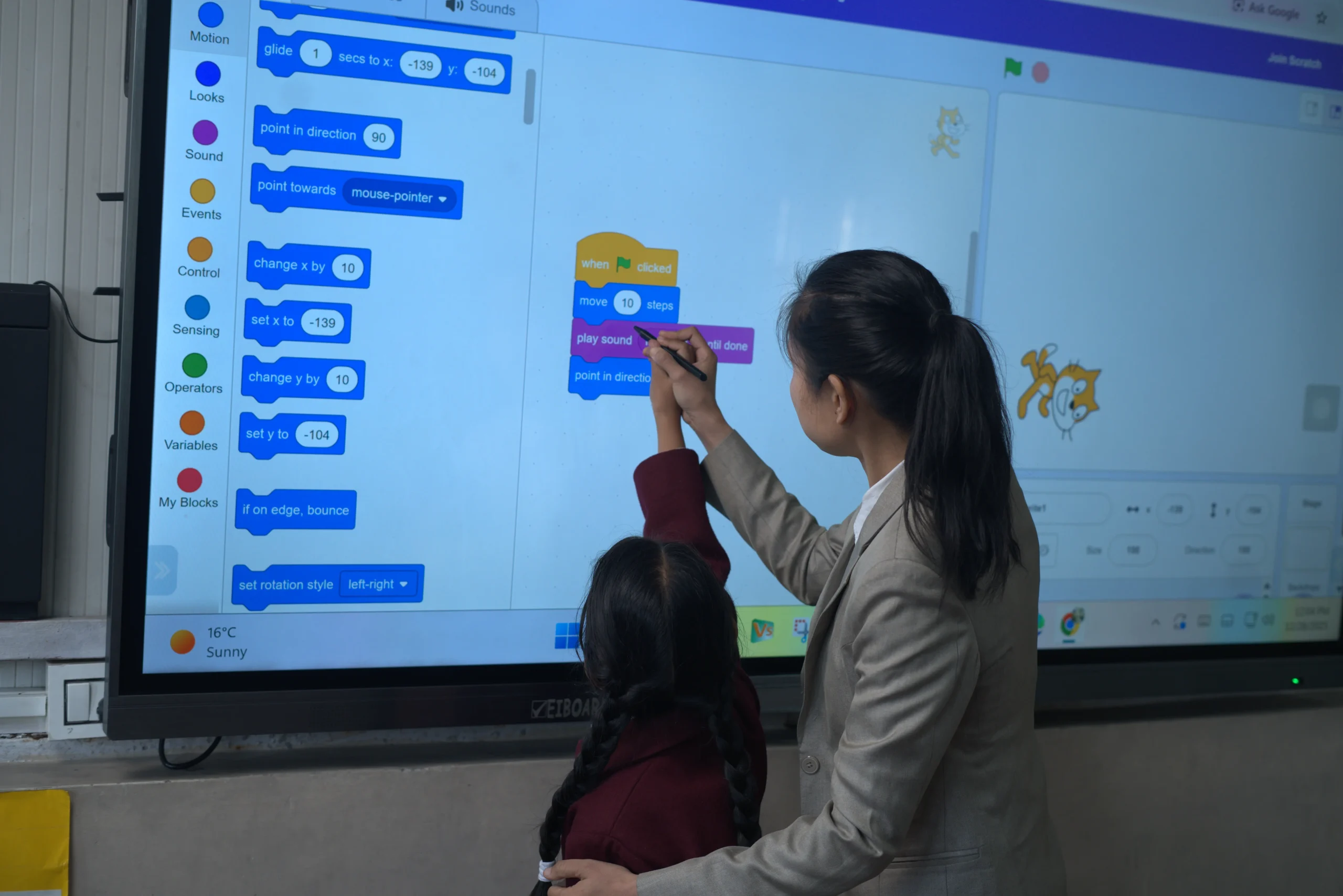
A smart learning classroom uses technology and digital tools to support meaningful teaching and make lessons more interactive for the students. Instead of relying only on textbooks and lectures, teachers can use visual presentations, videos, simulations, and interactive content to explain concepts.
For example, a science lesson can include animated demonstrations of how the solar system works, while a geography class can use visual maps and digital resources to help students understand locations and environments.
This approach helps students see and experience ideas instead of simply hearing about them.
How do smart classrooms improve student understanding?
One of the biggest advantages of smart classrooms is that they make lessons easier to understand. Many students learn better when they can see and interact with information rather than only listening to explanations.
Visual learning tools help simplify complex topics. When students can observe diagrams, animations, or real-life examples, they often grasp concepts faster and remember them longer.
Smart classrooms also encourage active participation. Teachers can involve students in discussions, quizzes, and interactive learning activities during the lesson. This keeps students focused and encourages them to ask questions.
Why do interactive learning methods help students learn better?
Children have different learning styles. Some learn best through reading, others through listening, and many through visual or practical experiences.
Interactive learning combines several teaching methods at once. When lessons include visuals, discussions, demonstrations, and activities, more students are able to understand the topic clearly.
Students also tend to stay more engaged in class when learning is interactive. This engagement improves concentration and encourages curiosity, which are essential for deeper understanding.
How do modern school facilities support better learning?
Smart learning classrooms are most effective when they are supported by the right facilities and infrastructure.
Schools that provide digital learning environments, structured classrooms, and modern learning spaces can create a more organized and efficient academic setting. Dedicated learning halls, digital teaching tools, and technology-enabled classrooms allow teachers to deliver lessons in a clearer and more structured way.
When facilities support learning, students benefit from both strong academic instruction and practical exposure to modern educational tools.
Do smart classrooms replace traditional teaching?
No. Technology works best when it supports good teaching rather than replacing it.
Experienced teachers still play the most important role in guiding students, explaining concepts, and encouraging curiosity. Smart classroom tools simply help teachers present information more effectively and create a richer learning experience.
The combination of skilled teachers and modern learning tools often leads to stronger academic outcomes.
Why is holistic development important for students?
Education should prepare children not only for exams but also for real life. Schools that focus on holistic development help students grow academically, socially, and emotionally.
Extracurricular activities such as sports, arts, music, and cultural programs allow students to explore their interests and develop confidence. These experiences teach teamwork, leadership, creativity, and discipline.
When academics and extracurricular activities work together, students develop into well-rounded individuals who are better prepared for future challenges.
Smart Learning at Daffodil School
At Daffodil School, we combine strong academic standards with state-of-the-art, modern learning methods.
The school is proud to be an ISO-certified institution, reflecting its commitment to maintaining high-quality educational standards and a structured learning environment.
Daffodil School integrates smart learning classrooms and digital e-hall systems to support interactive and engaging teaching. These facilities allow teachers to present lessons visually and clearly, helping students understand concepts more effectively.
Along with academic learning, the school actively encourages extracurricular activities (ECAs) including sports, cultural programs, creative activities, and student participation in various events. This balanced approach helps students build confidence, leadership, and communication skills.
The goal is not only to produce academically strong students but also to nurture responsible, capable, and well-rounded citizens who can contribute positively to the country.
Give Your Child a Future-Focused Learning Environment
Parents looking for a school that combines strong academics, smart learning classrooms, and holistic development will find a supportive environment at Daffodil School.
With experienced teachers, modern learning infrastructure, and a focus on both academics and extracurricular growth, Daffodil School provides students with the foundation they need to succeed.
Admissions are currently open.
Contact Daffodil School today to learn more about the admission process and secure a place for your child in the upcoming academic session.