Consistent academic improvement is a top priority for most parents. In today’s evolving education system, relying only on final exams is no longer enough to measure a student’s learning progress effectively. Traditional exams often capture performance at a single point in time, but they do not always reflect how well a student understands concepts throughout the academic year.
This is where continuous assessment plays an important role. Continuous assessment is a structured and ongoing evaluation approach that helps students stay engaged with their studies, identify learning gaps early, and improve steadily over time. For parents searching for schools in Kathmandu that prioritize consistent academic growth, understanding the value of continuous assessment can help in making a confident and informed decision.
What Is Continuous Assessment?
Continuous assessment refers to the regular evaluation of a student’s learning through a variety of academic activities rather than relying only on end-of-term exams. It allows teachers to track progress throughout the learning process and provide timely support when needed.
Continuous assessment typically includes multiple evaluation methods such as:
- Class quizzes and short tests
- Homework and assignments
- Group projects and presentations
- Class participation and practical activities
- Teacher observations and feedback
These methods provide a more complete picture of a student’s understanding, strengths, and areas that may need improvement.
Continuous assessment generally includes two main forms of evaluation:
- Formative Assessment – ongoing feedback during the learning process through quizzes, classwork, and discussions.
- Summative Assessment – evaluation conducted at the end of a learning period through tests, exams, or final projects.
Together, these approaches ensure that learning is measured consistently rather than only at the end of the academic term.
Why Continuous Assessment Matters
Continuous assessment is not only a grading system—it actively improves learning outcomes. It encourages students to remain attentive, engaged, and motivated throughout the academic year.
Some key benefits include:
- Early identification of strengths and weaknesses
Teachers can detect learning gaps early and provide additional support before small difficulties become larger academic challenges. - Encouragement of consistent study habits
Students are more likely to study regularly when assessments are spread across the term. This reduces dependence on last-minute exam preparation. - Reduced exam stress
When performance is evaluated over time, students feel less pressure during final exams. This creates a more balanced and positive learning experience. - Support for personalized learning
Teachers can adjust teaching methods according to individual learning needs, helping each student progress at their own pace.
How Continuous Assessment Improves Student Performance
Promotes Active Participation
Continuous assessment encourages students to take part in discussions, projects, and activities on a regular basis. Instead of passively memorizing information, students engage actively with the subject matter.
Interactive participation helps develop curiosity, creativity, and problem-solving skills, making learning more meaningful and enjoyable.
Provides Timely Feedback
Regular feedback is one of the most important advantages of continuous assessment. Students receive guidance on what they are doing well and where improvement is needed.
This allows them to correct mistakes early, strengthen weak areas, and build confidence in their academic abilities.
Supports Data-Driven Teaching
Assessment results provide useful insights that help teachers adapt their teaching methods. If a particular concept is difficult for many students, teachers can revisit the topic using different explanations or examples.
This ensures that no student is left behind and that learning remains effective for the entire class.
Encourages Mastery of Concepts
Repeated practice helps students gain deeper understanding of subjects. Instead of focusing only on memorization, students gradually build strong conceptual foundations.
This approach improves long-term retention and prepares students for higher-level learning in future grades.
Role of Technology in Continuous Assessment
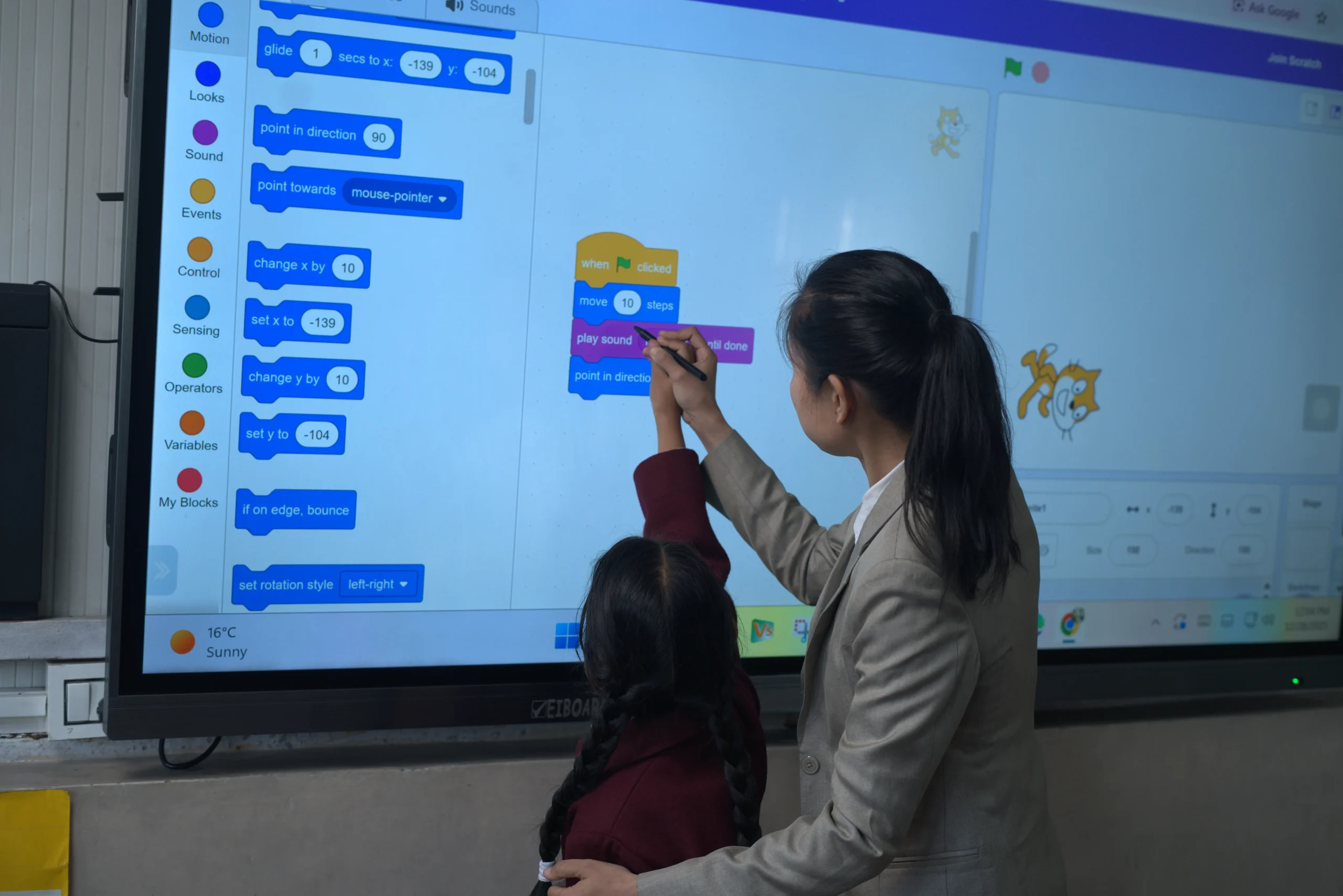
Modern educational tools have made continuous assessment even more effective. Schools that integrate technology into teaching and evaluation systems are better able to monitor progress and provide timely feedback.
Technology-supported continuous assessment may include:
- Smart classroom quizzes and interactive lessons
- Digital platforms that track student progress
- Visual learning tools that improve understanding
- Project-based learning systems that encourage collaboration
Digital tools allow teachers to evaluate performance more accurately while helping students learn through engaging and interactive methods.
Structured academic systems supported by modern technology also ensure consistency, transparency, and measurable academic progress.
Continuous Assessment at Daffodil School
Daffodil School in Kathmandu follows a structured and balanced approach to continuous assessment, combining modern learning tools with organized academic processes to support student achievement.
As an ISO-certified institution, the school maintains clearly defined academic standards that ensure consistency, accountability, and continuous improvement.
Key features of the school’s approach include:
- Structured academic framework
Concept-based learning methods help students understand subjects deeply rather than relying only on memorization. - Experienced teaching faculty
Qualified teachers provide guidance, feedback, and academic support tailored to individual student needs. - Regular assessments and evaluations
Frequent quizzes, projects, and presentations help students stay engaged and maintain steady academic progress. - Smart learning classrooms
Digital tools and interactive teaching methods make complex topics easier to understand and remember. - Balanced focus on extracurricular activities
Sports, creative programs, and cultural activities support confidence, discipline, and overall personal development.
By integrating continuous assessment into everyday learning, Daffodil School helps students build strong academic foundations and develop the confidence needed for future success.
Why Continuous Assessment Benefits Both Students and Parents
Continuous assessment offers advantages not only for students but also for parents who want to stay informed about their child’s academic progress.
For students, continuous evaluation:
- Improves understanding of subjects
- Builds confidence through regular feedback
- Reduces exam-related stress
- Encourages responsibility and self-discipline
For parents, it:
- Provides better visibility into academic progress
- Identifies learning challenges early
- Ensures consistent communication with teachers
- Confirms that the child is receiving structured academic support
Looking for a School That Prioritizes Consistent Academic Growth?
Choosing the right school means selecting an environment that supports both academic achievement and overall development. A strong continuous assessment system ensures that students remain engaged, confident, and prepared for future academic challenges.
Daffodil School offers structured academic systems, smart learning classrooms, and holistic development opportunities designed to help students perform consistently and succeed in higher studies.
Parents can contact the school to learn more about academic programs and evaluation systems or to schedule a campus visit. Admissions are open now